

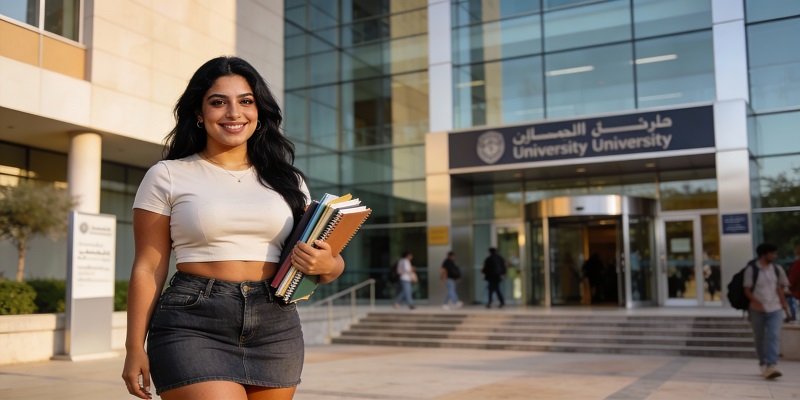
“Free seats” at Saudi public universities usually means scholarship-funded admissions for international students—where tuition and key benefits may be covered—rather than an automatic free place for every applicant.
Saudi Arabia’s Ministry of Education (MoE) describes a structured scholarship system with defined application routes and scholarship types, including “free scholarships” where the student gets full benefits.
This guide explains how the system works, how to apply through the official routes, what benefits may come with a free seat, and how to plan your budget and timelines realistically.
What “free seats” really means in Saudi Arabia
A “free seat” is best understood as a seat funded by a scholarship, not just a seat offered by the university.
MoE explains that scholarships in Saudi government universities vary by benefits, and it explicitly references “free scholarships” in which the student receives full benefits.
Because benefit packages can differ by university and program, “free seat” should be verified through official scholarship terms (MoE guidance + university scholarship pages).
The three outcomes to plan for
-
Seat-only / limited benefits: You may receive admission support but still pay some costs (varies by program).
-
Partial scholarship: Some costs covered; others remain.
-
Free scholarship (full benefits): The closest match to “free seat,” but competitive and policy-based.
Why Saudi Arabia (and the GCC) for higher education
Saudi Arabia is promoting international student scholarships through public universities, making it one of the GCC destinations where “free seat” language is tied to official government scholarship structures.
For international families, the appeal is that a strong scholarship package can reduce not only tuition but also the main cost barriers like housing and healthcare, depending on the scholarship type.
Saudi options can be even more attractive when combined with GCC backups (UAE/Qatar) to increase your odds across different funding models.
Internal Link Suggestion: /study-in-saudi-arabia-guide
Internal Link Suggestion: /free-study-in-the-uae
The official system: how Saudi public university scholarships work
Saudi Arabia’s MoE describes a clear framework for international scholarship students: applications can be submitted through public universities according to their admission opening dates.
MoE also lists additional official routes: applying through the Saudi Cultural Attaché in your country, or through the Saudi Embassy if there is no cultural attaché.
This matters because “free seat” opportunities are tied to official channels; using the correct channel increases the chance your application is reviewed properly and avoids documentation rejection.
Application routes (university portal / cultural attaché / embassy)
-
Apply through the university during its admission window (as MoE describes).
-
Apply through the Saudi Cultural Attaché in your country (if available).
-
Apply through the Saudi Embassy if there is no Saudi cultural attaché in your country.
Internal vs external scholarships (who qualifies)
MoE explains that government scholarships for international students are of two types: internal scholarships for non-Saudi students residing in the Kingdom with legal residency, and external scholarships for non-Saudi students from outside the Kingdom.
This split matters because the documentation and processing steps often differ for students already in Saudi Arabia versus those applying from abroad.
When planning a “free seat” application, identify early whether you are internal or external, because it affects which pathway applies to you.
Scholarship types by benefits (including “free scholarships”)
MoE states that scholarships in Saudi government universities are of three types according to their different advantages, and it explicitly includes “free scholarships” where the student gets full benefits.
That “by benefits” wording is the best reminder that “free seat” is not one fixed package—there are levels, and the level you receive determines total affordability.
So the practical strategy is to apply broadly and compare offers by total coverage, not by the word “scholarship” alone.
Internal Link Suggestion: /saudi-public-university-scholarships
Internal Link Suggestion: /gcc-scholarships-comparison
University example: King Abdulaziz University (KAU) scholarships
King Abdulaziz University maintains an official “International Student Scholarships” page, confirming that scholarship pathways exist at the university level beyond general MoE guidance.
For applicants, KAU is useful as a model because it shows how Saudi public universities may centralize scholarship info and connect it to admissions and international student processing.
The correct approach is to use MoE rules for the system and the university page for program-specific details and deadlines.
Eligibility, documents, and timelines
MoE indicates that scholarship applications can be submitted through public universities based on their application opening dates, so timing is not universal across all Saudi universities.
It also indicates multiple official routes exist (university portal, cultural attaché, embassy), meaning applicants should choose the route that matches their country situation and residency status.
For “free seat” competitiveness, the practical edge comes from submitting complete, correctly formatted documents early in the window.
Common documents (high-level planning list)
-
Passport/ID documents.
-
Academic transcripts and certificates (and any required attestations for international use).
-
Program-specific requirements (varies by university/major).
Tuition and cost of living (tables)
A “free seat” is only truly valuable if you understand what costs it removes and what costs remain.
MoE’s “free scholarships” language implies full benefits, which often means tuition and other supports are included, but the only safe assumption is what is explicitly written in official terms and your offer letter.
Even with strong benefits, students should budget for personal expenses that scholarships do not always cover.
Table 1: What a “free seat” may include (planning view)
| Cost category | Often covered in “full benefits” scholarships | What to confirm |
|---|---|---|
| Tuition | Typically covered in “free scholarships” | Full duration, renewal rules, and exclusions |
| Housing | May be covered depending on scholarship benefits | Housing type, availability, and rules |
| Monthly stipend | May be included depending on scholarship benefits | Amount, payment schedule, and conditions |
| Healthcare | May be included depending on scholarship benefits | Coverage scope and how to access services |
| Travel support | May exist depending on scholarship benefits | Whether flights/arrival allowances are included |
Table 2: Internal vs external applicants (fast clarity)
| Applicant type (MoE) | Where you are | Main application routes (MoE) | Key planning focus |
|---|---|---|---|
| Internal scholarship | Inside Saudi with legal residency | University route (plus official support routes where relevant) | Residency documentation + university deadlines |
| External scholarship | Outside Saudi | University portal, Cultural Attaché, or Embassy | Attestations, timelines, and travel readiness |
Saudi vs UAE vs Qatar (GCC comparison logic)
Saudi public university scholarships are structured through an official MoE framework that defines scholarship types and application routes, which is different from many UAE tuition-discount models.
Qatar often uses university-specific scholarship ecosystems and hubs (like Education City), so “free seat” logic there depends on the institution and sometimes on performance after enrollment.
For the best odds, treat Saudi as a “full-package scholarship” target while keeping UAE/Qatar applications as alternatives depending on your field and funding needs.
Internal Link Suggestion: /free-study-in-education-city
Internal Link Suggestion: /free-tuition-at-uaeu
Housing, work, and student life
Housing is often the biggest cost lever, and scholarship-included housing can transform affordability if your scholarship type includes it.
Student life varies by city and university culture, so choosing a university with strong international support can make adjustment easier for newcomers.
Part-time work and internships can be valuable for experience, but policies vary and should not be used as a guaranteed replacement for scholarship benefits.
Common mistakes (and how to avoid them)
Mistake #1 is applying late: MoE emphasizes university opening dates, so missing the window can mean missing the scholarship opportunity entirely.
Mistake #2 is choosing the wrong route: MoE lists different official pathways (university/cultural attaché/embassy), so applicants should use the route that matches their country and residency reality.
Mistake #3 is treating “free seat” as guaranteed: scholarships are competitive, so apply to multiple public universities and keep GCC backups.
Step-by-step application checklist
-
Identify your status: internal (resident) or external (outside Saudi), as MoE defines.
-
Choose the correct route: university portal, cultural attaché, or embassy based on availability.
-
Prepare documents early and in the required format, then apply as soon as the university window opens.
-
Apply to multiple public universities (include at least one major university like KAU with an official scholarship page).
-
Compare offers by benefits level (seat-only vs partial vs “free scholarship/full benefits”) before committing.
FAQ
1) What does “free seats at Saudi public universities” mean?
It usually means scholarship-funded admissions, including “free scholarships” where the student gets full benefits as described by MoE.
2) How do I apply for Saudi public university scholarships?
MoE lists three official routes: through public universities during application opening dates, through the Saudi Cultural Attaché, or through the Saudi Embassy if no attaché exists.
3) What’s the difference between internal and external scholarships?
MoE defines internal scholarships for non-Saudi residents with legal residency and external scholarships for students from outside the Kingdom.
4) Are “free scholarships” guaranteed if I’m admitted?
No—MoE describes different scholarship types and benefits; awards are competitive and depend on the scholarship category offered.
5) Does King Abdulaziz University offer scholarships for international students?
KAU has an official “International Student Scholarships” page.
6) Do these scholarships cover housing and stipends?
They may, depending on scholarship type; MoE notes scholarship types vary by advantages, including “free scholarships” with full benefits.
7) Should I apply to one university or multiple?
Multiple is safer because scholarship seats are limited and competition is high.
8) Can I apply to Saudi Arabia, UAE, and Qatar at the same time?
Yes, many students use a GCC portfolio approach to reduce risk and increase chances of finding a suitable funding package.
9) What’s the biggest application risk?
Missing the university application opening dates or using the wrong official route.
10) What should parents verify before travel?
Verify the written scholarship benefits (tuition, housing, stipend, healthcare) and onboarding steps through official channels.
Conclusion / Key takeaways
“Free seats” in Saudi public universities are best understood through the Ministry of Education’s official scholarship framework, which defines internal/external scholarships and includes “free scholarships” with full benefits.
Use MoE routes (university portal, cultural attaché, embassy) and confirm university-specific scholarship details on official pages like King Abdulaziz University’s scholarship page.
Apply early, apply broadly, and compare offers by total benefits—not by the label “free”—to secure a sustainable GCC study plan.





Hi, this is a comment.
To get started with moderating, editing, and deleting comments, please visit the Comments screen in the dashboard.